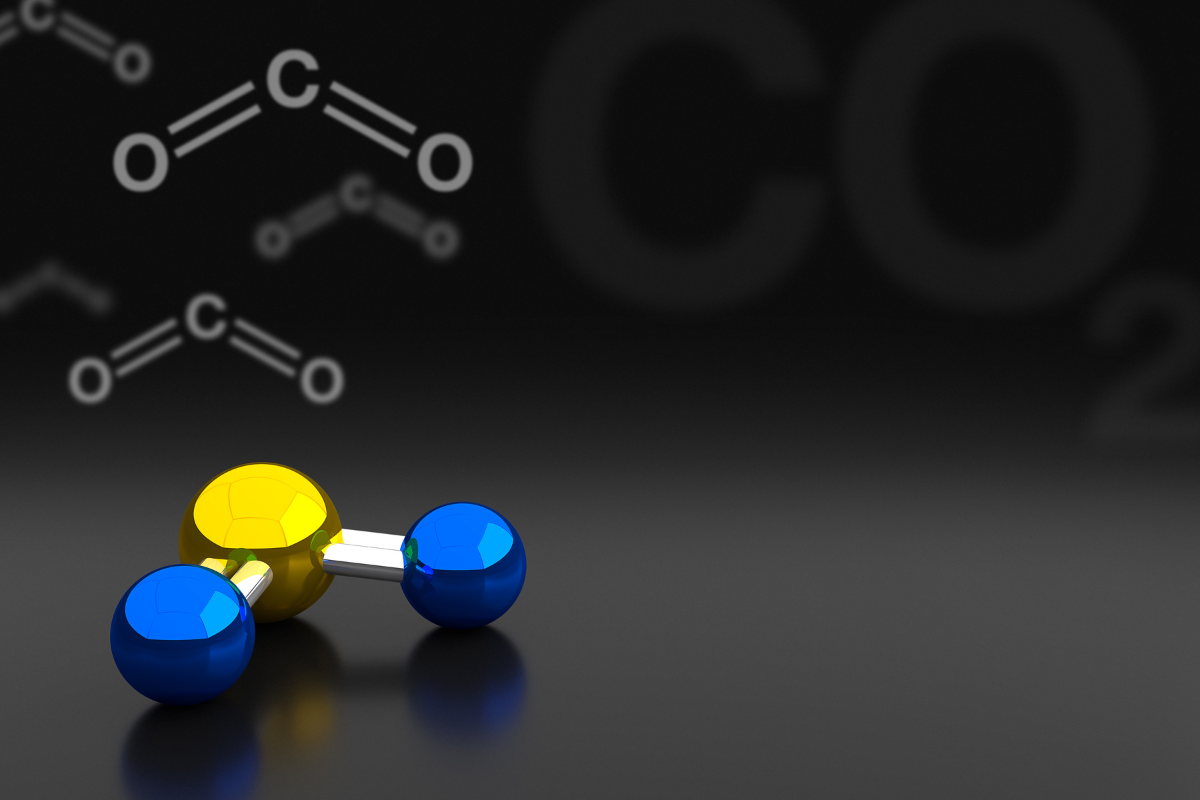
Dry ice is the solid form of carbon dioxide (CO₂), a naturally occurring gas found in the air we breathe. Unlike traditional ice, which is made from frozen water, dry ice is created by compressing and cooling carbon dioxide gas until it becomes liquid. That liquid CO₂ is then rapidly expanded, forming a snow-like solid that is compressed into blocks, pellets, or slices.
What makes dry ice unique is both its temperature and behavior. Dry ice has a surface temperature of –109.3°F (–78.5°C), making it significantly colder than water ice. This extreme cold allows it to freeze and preserve materials quickly and effectively.
Even more distinctive is the way dry ice changes state. Instead of melting into liquid as it warms, dry ice undergoes a process called sublimation where it transitions directly from a solid to a gas. This means dry ice does not leave behind moisture or puddles. As it sublimates, it releases carbon dioxide gas, which is why you may see a fog-like effect when dry ice is exposed to air. That “smoke” is actually water vapor in the surrounding air condensing due to the extreme cold.
Because it leaves no residue, dry ice is widely used in applications where moisture control is critical. It plays a vital role in food processing, cold chain transport, medical shipping, and industrial cleaning. In dry ice blasting, for example, pellets are used to clean machinery; upon impact, they sublimate, leaving no secondary waste behind.
However, proper handling is essential. As dry ice sublimates, it releases carbon dioxide gas, which can displace oxygen in enclosed spaces. Adequate ventilation and protective gloves are important safety measures.
When sourced from a trusted supplier like Irish Dry Ice, dry ice provides a powerful, efficient, and versatile cooling solution.
Dry ice may seem simple at first glance, but its science and applications are anything but ordinary.